Innovation in food and beverage is no longer about launching something “new.”
It’s about launching something that holds.
As we head into 2026, brands are navigating rising cost pressure, faster competitive cycles, increasing consumer scrutiny, and rapid AI adoption. To better understand what’s shifting, we spoke with leaders across marketing, R&D, AI, and commercialization about what innovation really requires now.
Here’s what’s emerging.
1. Innovation Is Easy to Launch — Harder to Sustain
The speed of product development has accelerated. Flavor trends move quickly. Formats are replicated in months.
But as Katherine “KP” Plueger, VP of Strategy & Insights at JT Mega, explains:
“You might be first to market with something, but it is so easily replicated. It quickly becomes very crowded.”
The challenge isn’t launching something new.
It’s sustaining growth after the novelty fades.
Brands heading into 2026 must ask:
- Does this create a competitive moat?
- Or are we just chasing incremental noise?
Sustainable innovation requires defensibility — whether through technology, formulation complexity, supply chain advantage, or brand positioning.
2. Taste Is Still King — But Sensory Experience Is the Differentiator
Despite the surge in functionality, protein claims, and wellness positioning, one truth hasn’t changed.
As Ratna Mukherjea, Global Head of R&D at ICL Food Specialties, puts it:
“At the end of the day, taste is king. We can solve many problems in the lab… but if it doesn’t taste good, consumers are not going to go for it.”
However, taste alone is no longer enough.
2026 innovation is increasingly sensory-led:
- Texture engineering
- Mouthfeel optimization
- Aroma cues
- Visual and experiential signals
These elements are harder to copy than flavor alone and create emotional differentiation that drives repeat purchase.
Cultural context also matters. Texture and flavor expectations vary globally, and innovation must account for regional norms — especially as brands scale internationally.
3. The Strongest Innovation Happens When Marketing Defines the Problem — Not the Solution
Cross-functional breakdown remains one of the biggest barriers to meaningful innovation.
Plueger notes:
“You can’t expect blue sky innovation from your R&D partners when you’re prescribing what the product is.”
When marketing briefs dictate format, ingredients, packaging, and positioning upfront, R&D is boxed in before real creativity begins.
Instead, the most effective teams:
- Articulate the consumer tension clearly
- Define the unmet need and barrier
- Allow R&D to solve the technical challenge
Innovation thrives when problems are clearly framed — not pre-solved.
4. AI Is Accelerating Decisions — But It’s Not a Replacement for Judgment
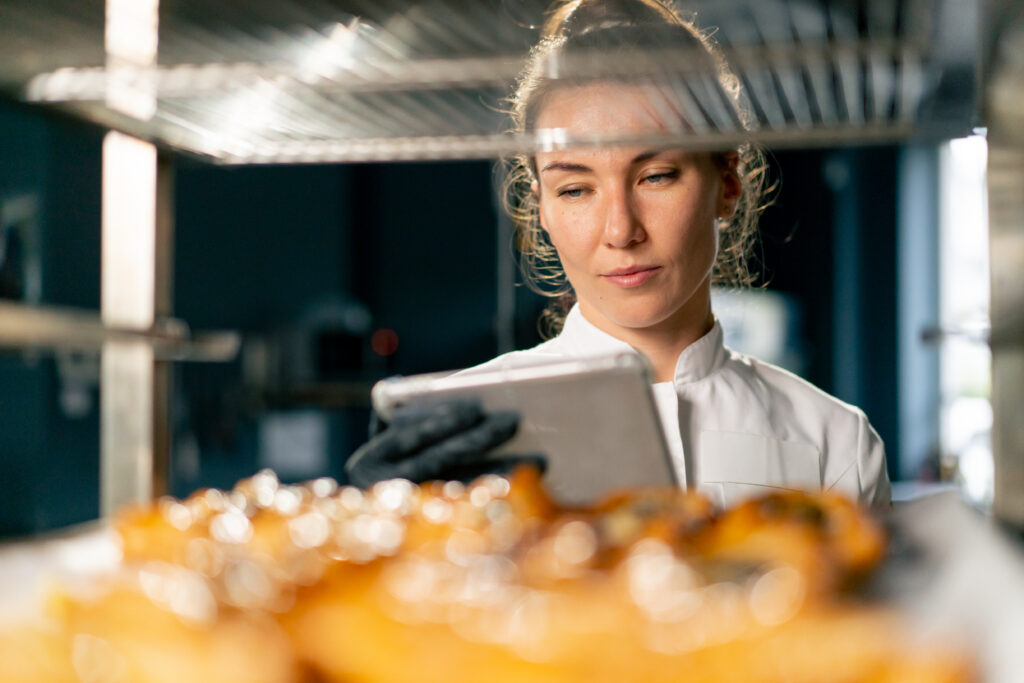
AI is rapidly becoming embedded across food and beverage — from consumer insights to commercialization modeling.
According to Danyel O’Connor — CEO & Co-Founder of Umami, Senior Advisor to Private Equity, and a 22-year veteran of the food and beverage industry — AI’s true value lies in reducing friction:
“It’s not bulletproof. You still have to check your work.”
AI can:
- Synthesize massive consumer review datasets
- Identify attribute-level sentiment
- Surface whitespace opportunities
- Accelerate iteration cycles
But it can also:
- Over-index on optimism
- Hallucinate
- Sound correct while being incomplete
Ratna reinforces this point:
“It’s a tool. It’s not going to come and solve all your problems.”
It’s important to work with AI partners that understand the risks of leveraging AI blindly, and in response take measures to execute controls that protect you and your business from the aforementioned AI tendencies.
The 2026 mindset is pragmatic:
Use AI to move faster — but maintain human validation.
5. The Industry Has Data — But It Isn’t Data-Ready
One of the most under-discussed barriers to AI maturity in food is fragmentation.
Ratna observes:
“We are not data ready.”
Food companies are not data-poor — they are siloed.
Data often lives:
- Across R&D, marketing, and sales systems
- Within supplier platforms
- Inside retailer portals
- In disconnected dashboards
Without integration, AI cannot generate meaningful advantage.
Becoming “data-ready” — not just data-rich — is emerging as a defining investment for forward-looking organizations.
6. Clean Label Is Baseline. Efficacy Is the Differentiator.
Small product tweaks matter — but they are optimization, not innovation.
As Mukherjea explains:
“If you’re tweaking something… that’s optimization, not innovation.”
Clean label, once differentiated, is now expected.
Where innovation stands out in 2026 is in measurable efficacy:
- High-quality protein that supports muscle retention
- Fiber systems that deliver satiety
- Ingredient technologies that enhance bioavailability
- Functional products that perform as promised
Consumers are increasingly skeptical of buzzwords. They want results.
7. Cost Pressure Is Forcing Hard Tradeoffs — And Consumers Notice

Retailers are squeezed. Consumers are squeezed. Brands are squeezed.
O’Connor highlights a growing risk:
“There’s a lot of quiet value degradation happening in products.”
When formulations change for cost optimization without transparency, consumers notice — even if they can’t articulate why. Repurchase declines follow.
Innovation heading into 2026 must redefine value as:
Price + Performance + Trust
At the same time, innovation cannot serve only premium consumers.
As Mukherjea emphasizes:
“You have to innovate across the consumer spectrum.”
Accessibility matters. Scaling ingredient technologies and formulation efficiencies is essential to avoid creating a two-tiered system where only higher-income consumers benefit from advancement.
8. Ultra-Processed Scrutiny Is Reshaping Strategy
The conversation around ultra-processed foods (UPF) continues to intensify — even without a universally accepted definition.
Consumers are:
- Reading ingredient lists
- Questioning additives
- Responding to media narratives
- Associating simplicity with health
Yet food safety, affordability, and shelf stability remain non-negotiable.
Innovation must balance:
- Ingredient simplification
- Regulatory compliance
- Cost efficiency
- Food safety standards
Removing ingredients is easy. Reformulating intelligently is not.
9. Innovation Is Happening Beyond the Shelf
AI-driven innovation is not limited to product development.
Companies are investing in:
- Supply chain forecasting
- Logistics optimization
- Demand modeling
- Waste reduction technologies
- Ingredient sourcing intelligence
Operational innovation creates resilience — and resilience enables product innovation.
The most competitive organizations in 2026 will innovate across the entire value chain, not just in front-of-pack claims.
10. GLP-1 and “Food as Nourishment” Are Driving a Formulation Shift
The rise of GLP-1 medications is influencing eating patterns and creating new nutritional demands.
Mukherjea outlines three formulation priorities:
“The superstar right at the top is protein.”
Alongside:
- Fiber for satiety and gut health
- Nutrient density in smaller volumes
But concentrating nutrition introduces complexity.
“Food formulations such a beverages with higher amounts of protein have challenges with increased viscosity”.
Delivering functionality in reduced volume while preserving taste and texture is a significant technical challenge.
Food is shifting from comfort-first to nourishment-first.
But comfort still matters.
The 2026 Innovation Reality
Innovation heading into 2026 is not about trend-chasing.
It is about:
- Building defensible advantage
- Protecting sensory experience
- Integrating AI responsibly
- Becoming data-ready
- Maintaining transparency under cost pressure
- Delivering measurable efficacy
- Innovating across the consumer spectrum
- Strengthening systems behind the product
Innovation is no longer a department.
It’s the system.